The Women’s Africa Cup of Nations (WAFCON) trophy had belonged to an exclusive club, with only three winners ever lifting it before the 2026 edition. African giants Nigeria had won it 10 times, Equatorial Guinea twice, while South Africa joined the list in 2022.
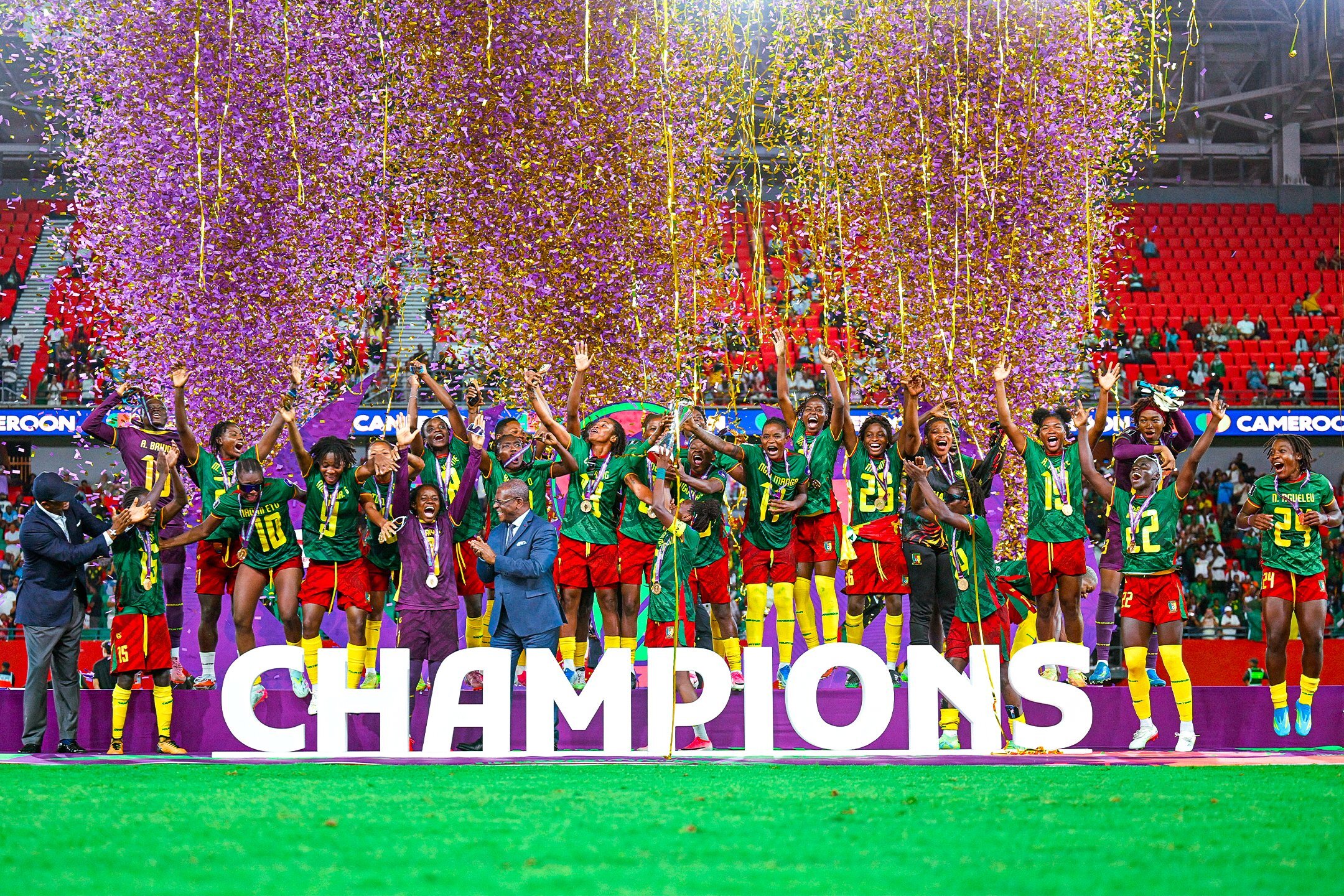
But on Sunday night, Cameroon joined that club.
The Indomitable Lionesses of Cameroon defeated debutants Malawi 3-0 in the final at the Prince Moulay El Hassan Stadium in Rabat.
Cameroon didn’t get to the final the easy way; they did it the hardest way possible. Having to beat 10-time champions Nigeria in the quarter-final and two-time finalists Morocco (2022 and 2024) in the semi-final was undoubtedly no small feat, and they definitely deserved to be there.
Malawi themselves didn’t do it the easy way either. In fact, as debutants, nobody would have tipped them to make it out of their group considering they were drawn alongside Nigeria and Zambia, two of the strongest teams on the continent.
But they didn’t just make it out of the group, they finished top.
They edged Ghana in the quarter-final, coming from a goal down to turn it around and seal a first-ever Women’s World Cup qualification. They then beat Algeria 3-1 in the semi-final to book a spot in the final.
It was a final that produced plenty of end-to-end action and also showed that in finals, the smallest mistakes can be punished.
Malawi got off to a good start and tried to work a few openings, but none of them really troubled Michaely Bihina, who had been one of the standout performers of the competition.
It didn’t take much longer for Cameroon to settle though, and they got their breakthrough in the 20th minute.
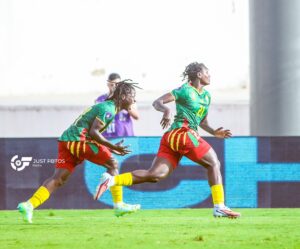
Paris Saint-Germain’s Naomi Eto put in a good cross into the six-yard box and Grace Mendoa’s header was parried away by Mercy Sikelo, the Malawian goalkeeper. But Marie Ngah, the Galatasaray forward who had emerged as Cameroon’s leading scorer at the tournament, was there at the back post to head home the resulting rebound.
Naomi Eto, who was crucial to the first goal, was involved again for the second.
The goal came from a corner in the 29th minute. The ball dropped kindly for her and she produced a beautiful volley into the bottom-left corner of the Malawi goal. The technique to bring the ball under control and then finish was magnificent.
Naomi Eto didn’t stop there as she continued causing problems for the Malawi defence, particularly down the right-hand side.
She got onto a good ball from Atcha Toko, who found her in space towards the edge of the area. Eto controlled beautifully, dribbled past the onrushing Mercy Sikelo and delivered a sizzling cross, much like she did for the first goal.
This time, Marie Ngah was perfectly positioned to turn it into the net in the 45+3rd minute and grab her second goal of the night.
At that point, it looked over for Lovemore Fazili’s side and it didn’t seem as though Cameroon were going to switch off and allow Malawi a route back into the game in the second half.
Malawi were limited to just one shot and one shot on target in the first half. It looked as though the pace of the game and the midfield solidity provided by players like Atcha Toko and Monique Ngock were simply too much for the Malawians to handle.
It was an excellent first half from Valentine Nguele’s side and her tactical approach had worked perfectly.
The second half proved different though.
Temwa and Tabitha Chawinga were really in beast mode and looked ready to drag Malawi back into the contest. Tabitha repeatedly took on the Cameroon defenders, but they stood firm.
Temwa came close in the 65th minute after Tabitha had forced a save from Michaely Bihina. The rebound fell kindly to Temwa, but she couldn’t find the back of the net as her effort drifted inches wide.
Time kept ticking away and with every passing minute, Cameroon’s chances of becoming champions only increased.
Cameroon thought they had scored a fourth in the 90+5th minute when Michaela Abam, who had come on in the 87th minute, found the net after a rebound off Sikelo. However, the goal was ruled out for offside.
As much as Malawi didn’t score, it wasn’t a bad final from their perspective.
They upped the ante in the second half and a team that managed just one shot in the first half finished the game with nine attempts, three of them on target.
There are plenty of lessons for Malawi to take away and they came remarkably close to winning the competition on their debut.
But perhaps it would have been unfair to Cameroon, who had suffered heartbreak three times before.
Prior to Sunday’s final, Cameroon had reached the WAFCON final three times since the competition’s format changed in 1998, but each time they came up against Nigeria and lost.
In 2004, Nigeria destroyed Cameroon 5-0, with legendary forward Perpetua Nkwocha scoring four goals in a historic performance.
In 2014, Nigeria won 2-0 to claim the trophy in South Africa.
In 2016, Nigeria narrowly beat Cameroon 1-0 right in front of Cameroon’s home crowd in Yaoundé.
Those defeats had been tormenting for Cameroon and not winning this one would have been even more painful considering Nigeria were no longer standing in their way.
Thankfully for them, they got the job done.
For a team that had never scored in a WAFCON final before, scoring three goals in this one was beautiful.
Cameroon are the champions of the 2026 Women’s Africa Cup of Nations, and the nations that have won this competition before can now welcome them into that exclusive club of champions.