
The Women’s Africa Cup of Nations will have a new winner, and that is now confirmed after defending champions Nigeria were knocked out of the competition.
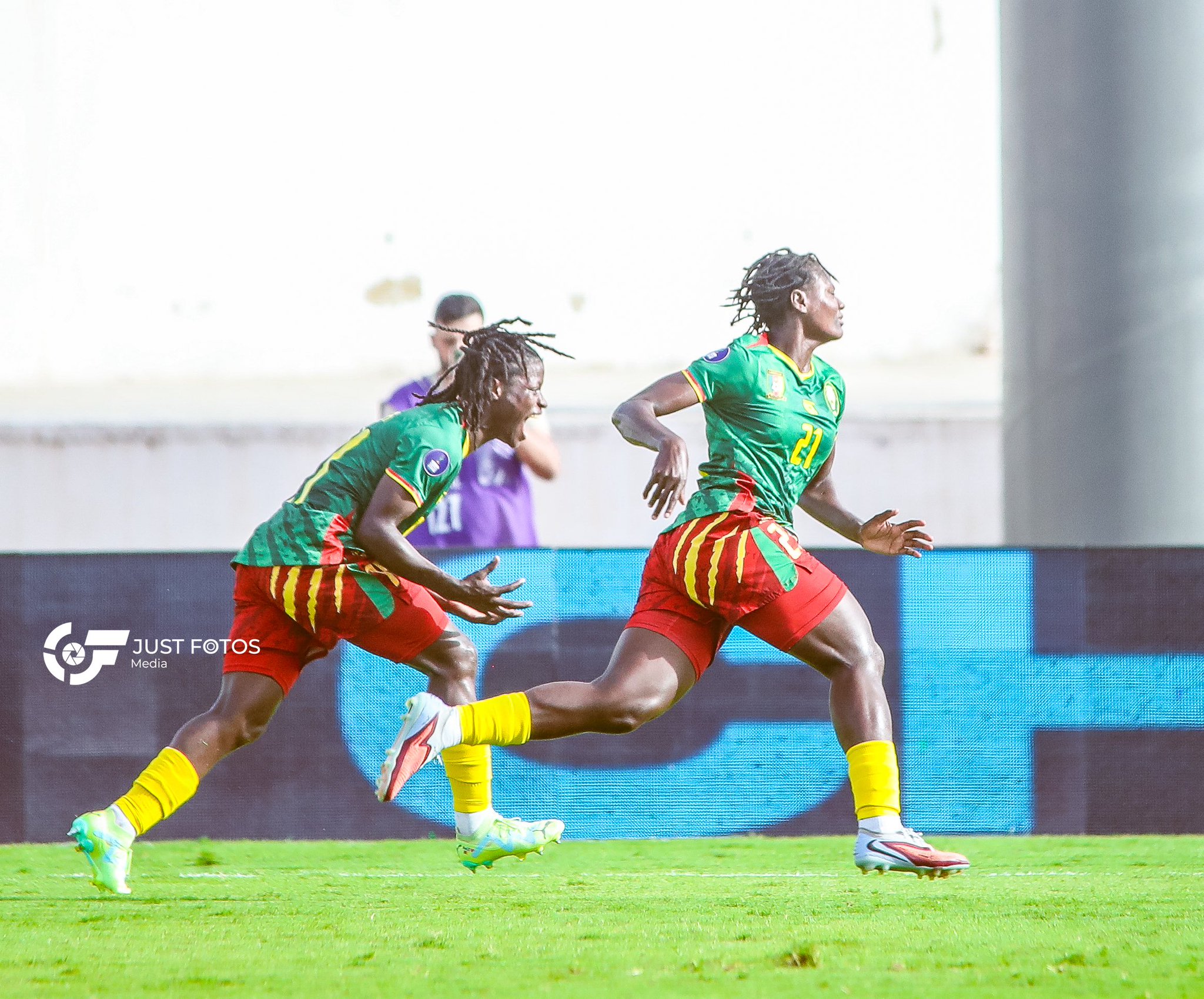
The Super Falcons lost 1-0 to the Indomitable Lionesses of Cameroon at the Larbi Zaouli Stadium in Casablanca in the quarter-final.
Justine Madugu’s side had thrashed Egypt in their final group game and, having started the tournament badly with a loss to Malawi in the opening game, that performance, alongside the resilient win against Zambia in the second game, offered a glimpse of a Nigeria side beginning to find its feet and looking ready to do what it is best known for doing at this tournament.
Tosin Demehin and Jennifer Echegini returned to the starting XI after serving their suspensions, while Rinsola Babajide, who was brought into the XI for the last game, maintained her place. Monday Gift also got her first start of the competition.
For this game, Nigeria will feel hard done by.
The Falcons created plenty of chances, finishing with 17 attempts at goal, nine of them on target. But none found the back of the net.
Credit should go to Cameroon’s goalkeeper, though. Benfica goalkeeper Michaely Bihina made crucial saves and claims throughout the game to ensure that nothing the Super Falcons offered got past her.
Maybe that is where Nigeria will rue conceding first.
For all the good start the Falcons had, and the early glimpse that they were getting into the groove, they conceded a goal that, from the Nigerian perspective, will feel like a poor one to give away. From Cameroon’s perspective, it was a very good one to score.
Nigeria conceded a free-kick close to the edge of the box in the 17th minute, and defender Myriam Nyadjou stepped up and hit a hard one to Chiamaka Nnadozie’s right, into the top corner.
It was a good strike, no doubt, but the argument that Nnadozie could have had her wall better positioned would not be an unfair one. The wall appeared to leave Nyadjou with an obvious opening to aim for, while Nnadozie may also feel she could have been better positioned to make the save.
Nigeria pushed hard for an equaliser, but it did not come before half-time.
Cameroon would have anticipated coming out for the second half with even more fight and resilience, knowing the quality that the Nigerian side possesses.
Nigeria made changes in the 62nd minute, Esther Okoronkwo and Toni Payne also came on for Christy Ucheibe and Monday Gift, after Uchenna Kanu replaced Rinsola Babajide, who appeared to have picked up a knock.
Nigeria kept pushing, although they were tested more in transition after the changes, and Nnadozie had to make good saves and claims to keep the Falcons in the game.
Ucheibe’s departure also appeared to unsettle the Nigerian midfield for a spell, but the Falcons eventually found their groove again and continued pushing for the equaliser.
At that point, it felt like the goal would either come for Nigeria or Bihina would become the hero for Cameroon.
And when one final, very good chance came in the 90+3rd minute, Esther Okoronkwo raced onto a ball played over the top.
Asisat Oshoala, who had come on for Jennifer Echegini a minute earlier, was available inside the box.
Okoronkwo chose to shoot.
She beat Bihina this time, but her effort went wide.
That was a huge chance, and if Okoronkwo was going to take the shot rather than look for Oshoala, Nigeria would have expected her to score.
That one looked painful.
It was the moment Nigeria’s chance of staying in the competition seemed to slip away.
The final whistle soon followed.
Nigeria will not be defending the WAFCON title they won in July last year. More importantly, they will not get the chance to qualify automatically for next year’s FIFA Women’s World Cup in Brazil just yet.
A place in the semi-final would have sealed that ticket.
But all hope is not lost for the Falcons.
There is still a play-off route to the World Cup.
How can the Super Falcons make it to Brazil 2027?
Nigeria, alongside the other losing quarter-finalists, will take part in play-off matches to determine the two CAF teams that will progress to the FIFA Play-Off Tournament.
Ten nations will qualify for the FIFA Play-Off Tournament: two from each of the AFC, CAF, Concacaf and CONMEBOL, and one each from the OFC and UEFA.
The first phase of the play-off tournament will take place in November and December 2026 at a centralised venue, featuring six teams ranked according to the latest FIFA/Coca-Cola Women’s World Ranking before the play-off draw.
The top two teams will qualify for the final play-off phase, which will be played at a centralised location in February 2027.
They will be joined by two teams from Concacaf, one from CONMEBOL and one from UEFA.
The six teams will then be drawn into three paths, with each path decided by a direct knockout match. The three winners will qualify for the FIFA Women’s World Cup.
Teams from the same confederation will not be permitted to be drawn in the same pathway.
So, while Cameroon have ended Nigeria’s WAFCON title defence and denied the Falcons an automatic World Cup place, Nigeria’s road to Brazil is not over yet.