
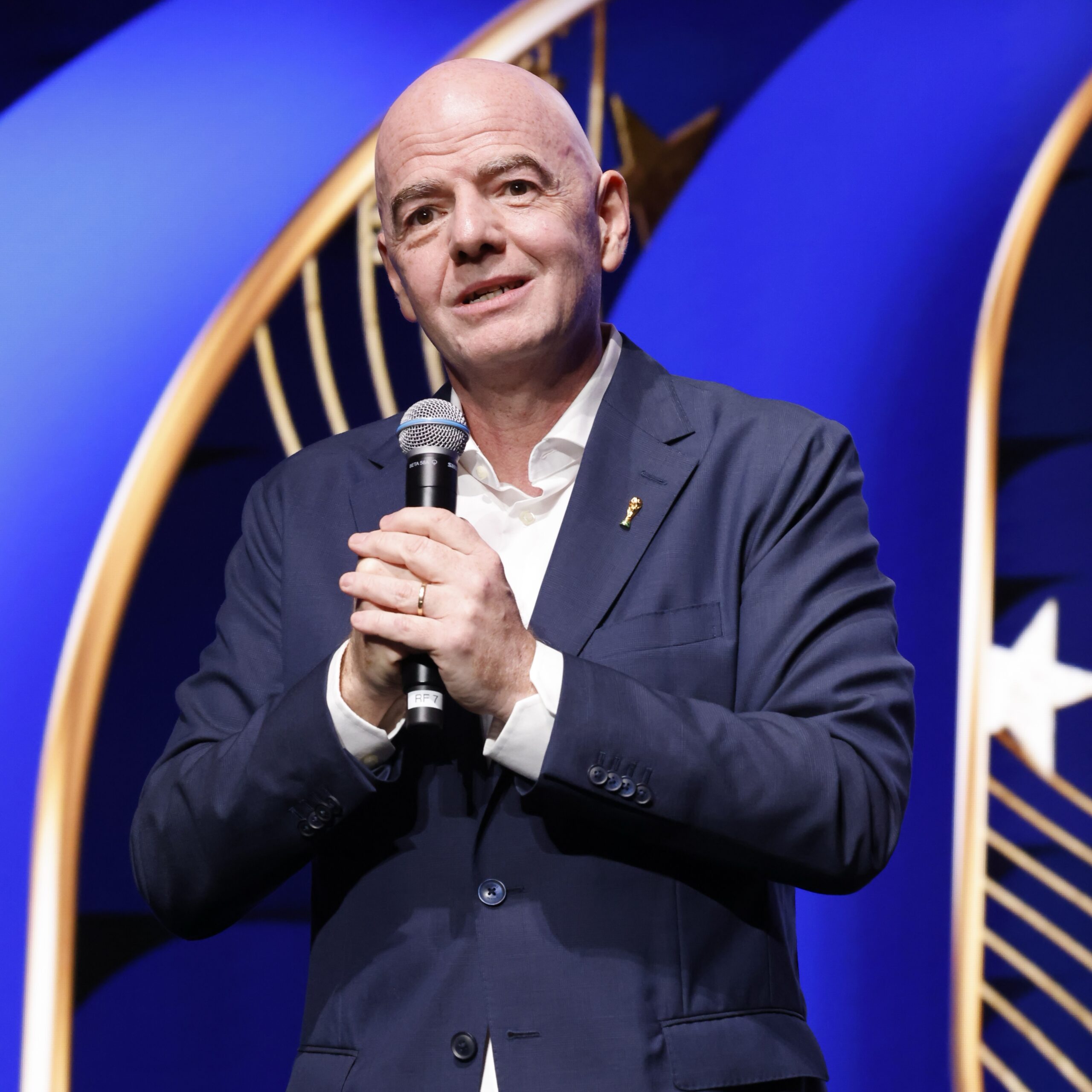
FIFA president Gianni Infantino has issued his strongest public defence of both his leadership and world football’s governing body since the conclusion of the 2026 FIFA World Cup, accusing critics of “spreading hate” and insisting the tournament should be remembered for its unity rather than its controversies.
The message marked Infantino’s most comprehensive public response since the tournament ended. Throughout the World Cup, the FIFA president largely avoided addressing the media in a traditional setting, choosing not to hold a press conference either during the competition or after the final.
Instead of addressing questions from journalists, Infantino used the lengthy post to defend FIFA’s work, praise the three host nations and challenge those who scrutinised the organisation throughout the tournament.
At the heart of his message was a belief that the World Cup represented football at its very best.
Infantino argued that billions followed the competition worldwide while more than seven million supporters from over 200 countries travelled across Canada, Mexico and the United States to attend matches, creating what he described as a celebration of unity, diversity and togetherness.
His sharpest criticism, however, was reserved for those he believes spent the tournament focusing on FIFA rather than football.
“Sorry that you were so consumed by hate and criticism that you missed it all,” Infantino wrote.
He later added: “To those behind their pens and papers, behind their screens spreading hate and false rumours, I want to say that while you are sitting behind, we at FIFA are on the front lines organising, working hard and delivering the best show in the world.”
The tone marked one of the most direct attacks Infantino has made on critics during his presidency, framing the conversation around the World Cup as a contrast between those celebrating football and those, in his view, determined to undermine it.
Throughout the statement, Infantino portrayed the tournament as an overwhelming success both on and off the pitch.
He praised the governments of Canada, Mexico and the United States, alongside security agencies, volunteers and tournament staff, for delivering a competition he said passed without violence or significant security incidents.
“We experienced no violence, no incidents, 100 per cent safety and security, only joy and happiness,” he wrote.
Infantino repeatedly returned to football’s ability to unite people across political, cultural and geographical divides, arguing that this was the tournament’s defining legacy.
“While you divide, we unite,” he wrote.
“Our world needs love, not hate; tolerance, not division.”
The statement also appeared to answer many of the criticisms that followed FIFA before and during the World Cup.
The tournament was accompanied by debate surrounding travel restrictions affecting supporters and officials from some participating nations, contentious disciplinary decisions, refereeing controversies and broader questions over FIFA’s governance and decision-making.
Rather than responding individually to those issues, Infantino argued that isolated controversies had overshadowed the bigger picture.
He pointed to Iran’s participation as an example of football bringing people together despite political tensions, saying supporters ultimately united behind the team rather than allowing international disputes to dominate the occasion.
“Football is about unity, not division,” he wrote.
He also defended FIFA’s efforts to facilitate travel for participating nations and supporters, arguing that attention had focused on those unable to attend rather than the millions who successfully travelled to the tournament.
“You mentioned the few people denied visas and overlooked the millions who were approved,” he wrote.
Infantino further highlighted the visibility the tournament provided for countries that rarely receive global attention, arguing that smaller football nations left the World Cup with renewed belief and inspiration.
“They gave hope,” he wrote, “hope that anyone can be part of the world, be big in the game, regardless of where they come from.”
Without referring to any specific incident, Infantino also defended FIFA over criticism of refereeing and disciplinary rulings.
He argued that contentious officiating decisions are commonplace across elite football and questioned why similar situations attract greater scrutiny when they occur at FIFA tournaments.
Rather than dwelling on controversy, the FIFA president insisted the World Cup should be remembered through the experiences of supporters who filled stadiums across the three host countries.
He described scenes of families travelling together, children meeting players and fans from different nations celebrating side by side as proof of football’s unique ability to bring people together.
For Infantino, those moments mattered far more than the criticism surrounding the competition.
He concluded the statement with a personal message to FIFA’s detractors.
“To those spending their time and energy hating us, please take a moment to reflect, meditate, pray or watch a football match and truly observe the faces, the eyes, the emotions.
“Because only our beautiful game can deliver such an extraordinary show.”
Infantino ended by expressing pride in FIFA’s work and his own contribution to the tournament.
“May football rise above all hate,” he wrote.
“I am incredibly proud, as FIFA President, to have contributed, even a little, to this show.”
The statement is unlikely to end debate over FIFA’s leadership or the controversies that accompanied the 2026 World Cup. Those who criticised the organisation before and during the tournament are unlikely to be persuaded by Infantino’s assessment.
It does, however, offer the clearest indication yet of how the FIFA president wants the competition to be remembered.
For Infantino, the story of the 2026 World Cup is not one of governance disputes or off-field controversy. It is one of packed stadiums, record global audiences and football’s enduring ability to unite millions of people across borders, cultures and political divides.
Whether that becomes the tournament’s lasting legacy remains a matter of perspective.
