
Last week, journalist Romain Molina reported that the 2026 Women’s Africa Cup of Nations, WAFCON, would be postponed.
It was not the sort of news anyone wanted to hear. There had been anticipation building around the tournament, and once the report emerged, attention quickly turned to what the official word from the Confederation of African Football would be.
On Wednesday night, CAF’s head of media, Luxolo September, posted on X that the organisation would communicate within 48 hours about the situation surrounding the tournament, adding that discussions had been ongoing for weeks.
Once that message went out, the direction of travel felt obvious. If an official statement was coming, it was unlikely to be anything other than confirmation of a rescheduling.
And it was.
The body language from CAF hardly suggested a major tournament was around the corner. There was little of the usual build-up. No visible media buzz, no sense of a countdown.
CAF later announced that the 2026 Women’s Africa Cup of Nations would indeed be postponed, just 12 days before the tournament was due to begin.
This edition was scheduled to take place in Morocco, which would have been hosting the competition for the third consecutive time. It was originally set to kick off on March 17, following the country’s staging of the men’s continental tournament between December and January.
But in a statement released on Thursday, CAF confirmed that the competition will now take place between July 25 and August 16, saying the decision was taken “to ensure the success of this important women’s competition, in light of certain unforeseen circumstances”.
That explanation, though, raises its own question.
What exactly counts as “unforeseen circumstances”?
Back on February 1, there were rumours that Morocco wanted to step away from hosting the 2026 WAFCON, with South Africa mentioned as a possible replacement.
But the government quickly downplayed that suggestion. In a statement, the sports minister, Gayton McKenzie, insisted that Morocco remained the confirmed host and said the deputy minister’s remarks simply reflected the government’s longstanding engagement in supporting African football and South Africa’s proven ability to stage major international sporting events.
Even with that clarification, some observers remained uneasy. In football administration, rumours rarely appear entirely out of thin air.
Now, weeks later, the conversation is no longer about who might host the tournament.
Instead, it is about the competition being postponed just 12 days before kickoff.
Whichever way you look at it, it makes no sense.
So perhaps, in some ways, it makes sense that the tournament was eventually moved. Once the conversation about South Africa potentially stepping in as hosts began to circulate, rescheduling the competition might have been the more reasonable path.
And it is worth remembering that the Confederation of African Football already knew discussions were ongoing. CAF’s head of media, Luxolo September, said as much in his post, noting that conversations about the situation had been taking place for weeks.
That is where the timeline becomes difficult to ignore.
Between February 1, when the rumours around hosting first began to gather momentum, and March 5, when CAF finally confirmed the postponement of the 2026 Women’s Africa Cup of Nations, roughly four weeks had passed. In that window, it is reasonable to wonder whether the organisation could have reached a decision earlier and communicated it with more clarity.
Because postponing a tournament 12 days before kickoff is not normal.
For a competition of this scale, such timing is extraordinary. Yet it has happened in the context of the women’s game in Africa, a space that many already argue has long been poorly supported and inconsistently managed.
Which is why the optics matter.
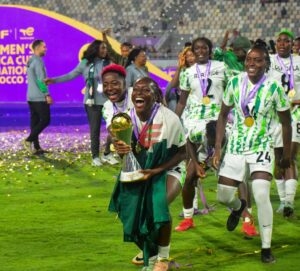
Looking at the situation from another angle, there are factors that might help explain how things reached this point. The scheduling around the tournament has been unusually tight. Morocco hosted the previous edition of the Women’s Africa Cup of Nations in June and July 2024, which the Super Falcons of Nigeria won. The country is also preparing to host the 2025 Africa Cup of Nations between December and January.
With another WAFCON scheduled for early 2026, the calendar suddenly begins to look crowded.
Seen from that perspective, delaying the tournament might have been the sensible option.
But sensible decisions still require careful handling. With earlier communication and clearer planning, what may have been a reasonable adjustment would not have turned into the confusion and frustration that now surrounds it.
So, if CAF thinks the decision to postpone the tournament, as they said, “in the avoidance of unforeseen circumstances,” makes sense, it definitely makes no sense that it is being postponed at this time, and it hurts.
The People Left to Pick Up the Pieces
Analysis by Joy Ojeabulu
First and foremost, I am writing this with immense disappointment and some frustration too.
Disappointed because the women’s game on the continent, in terms of dignity, continues to take three steps forward and twice as many backward every single time. This display by both Confederation of African Football and Morocco, who we are still not entirely certain remain the hosts, has jeopardized so much for everyone involved.
You think of the players first. They were in camp for weeks preparing for a tournament that would eventually be rescheduled, and the confederation did not deem it necessary to announce this earlier to prevent such disruption. In doing so, they have also put national teams like the Ghana women’s national football team, the Black Queens, who are currently camping in the Middle East, a region already volatile, at unnecessary risk.
You think of the federations of all 16 participating nations who have had to organize high-profile matches and friendlies to prepare their women, only for all that planning to now be rendered pointless.
You think of broadcast partners who have booked time slots on air, already prepared or even launched digital campaigns, and will now have to face huge losses running into millions simply because this situation could not be properly managed or communicated earlier than 12 days before the start of the tournament.
Finally, because of time, the fourth group I think about are those I feel most frustrated and saddened for. From experience, many journalists and digital creators have to self-fund their travel to the tournament, as many corporations are still reluctant to sign sponsorship deals for coverage during the Women’s Africa Cup of Nations. This situation now gives them another reason to maintain that stance. Many will also lose personal funds on already booked logistics such as flight tickets and accommodation.
Travelling within the continent is already expensive, and for most people it is impossible to book flights just a few days before an event that was still confirmed to be happening by the CAF president as recently as last month.
For all the people mentioned above, the question becomes simple. Who covers their losses and their stress?
What makes it worse is that I did not see a single sign of apology or regret for the inconvenience caused in the official statement.
I do not stutter when I say that everyone involved should be ashamed of themselves for how the women’s game on the continent has been treated.



Yesss!!! They should be ashamed!
No apology, no sense of remorse! Is this the progress we’ve been applauding. Shameful.